Matteo91 Inviato 4 Dicembre, 2015 #1 Inviato 4 Dicembre, 2015 (modificato) Alla prossima asta Triton XIX verrà venduto un ripostiglio di monete arcaiche. Insieme alle foto delle monete ci vengono forniti anche fondamentali informazioni sul luogo del ritrovamento (nonchè la storia dell'acquisto e della custodia del ripostiglio, che però considererei marginale). Il Ghazzat Hoard è stato rinvenuto negli anni '60 nei pressi della zona costiera di Gaza e si configura, quindi, come un'altra importante testimonianza dei commerci con il Mediterraneo Orientale. Vengono proposti dalla stessa casa d'aste accostamenti con il più noto ripostiglio di Asyut e di Zagzig (entrambi in Egitto), con i quali condividerebbe diverse tipologie monetali. Quello che mi sorprende, da ignorante in materia, sono: - la presenza di un considerevole numero di grandi nominali delle "tribù traco-macedoni". - l'assenza di stateri d'Egina (ma si tratta comunque di un piccolo ripostiglio...). - la presenza del tetradramma ateniese descritto come "intruso"... Anche gli altri ripostigli (Asyut e Zigzag) presentavano caratteristiche simili a questo? Sarebbe interessante provare a ricostruire qualche rotta commerciale dell'epoca... Ecco il link alla descrizione del lotto: http://www.cngcoins.com/Coin.aspx?CoinID=300257. Seguono l'immagine ingrandita e la descrizione delle monete. Modificato 4 Dicembre, 2015 da Matteo91 Cita Awards
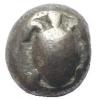
Matteo91 Inviato 4 Dicembre, 2015 Autore #3 Inviato 4 Dicembre, 2015 The Ghazzat Hoard. Hoard of twenty-seven archaic and early classical silver coins. Includes the following:(a) THRACE, Ainos. Circa 500-475 BC. AR Oktadrachm (27mm, 27.52 g). Griffin seated left, raising left foreleg; ZA and rosette to left / Quadripartite incuse square. May,Abdera, Period II, Group XX, 40 (A34/P38); Asyut 134.(b) THRACO-MACEDONIAN TRIBES, Derrones. Circa 480-465 BC. AR Dodekadrachm (32mm, 35.07 g). Herdsman, in background, guiding bull right; ΔEP[PO] to right / Quadripartite incuse square. Peykov –; HPM –; Asyut 31 (same obv. die).© THRACO-MACEDONIAN TRIBES, Derrones. Circa 480-465 BC. AR Dodekadrachm (32.5mm, 36.64 g). Herdsman, in background, guiding bull right; traces of ethnic to right / Quadripartite incuse square. Peykov –; HPM –; cf. Asyut 30–1.(d) THRACO-MACEDONIAN TRIBES, Derrones. Circa 480-465 BC. AR Dekadrachm (26.5mm, 30.85 g). Two bulls, yoked and wearing fillets around neck, standing left; [Δ]ERONIKO above, wheel of cart to right / Wheel of four spokes within incuse square. Peykov A1530; Asyut 33.(e) THRACO-MACEDONIAN TRIBES, Derrones. Circa 480-465 BC. AR Dekadrachm (27.5mm, 27.81 g). Two bulls, yoked and wearing fillets around neck, standing left; [Δ]ERONIKO above, wheel of cart to right / Wheel of four spokes within incuse square. Peykov A1530; Asyut 33.(f) THRACO-MACEDONIAN TRIBES, Ichnai. Circa 485-470 BC. AR Oktadrachm (32mm, 28.60 g). Herdsman, wearing petasos, in background, guiding two bulls left; traces of ethnic to right / Quadripartite incuse square. Peykov A1700; Asyut 43 (same obv. die).(g) THRACO-MACEDONIAN TRIBES, Ichnai. Circa 485-470 BC. AR Oktadrachm (28mm, 26.14 g). Herdsman, wearing petasos, in background, guiding two bulls left; traces of ethnic to right / Quadripartite incuse square. Peykov A1700; Asyut 40–4.(h) THRACO-MACEDONIAN TRIBES, Orreskioi. Circa 480-465 BC. AR Stater (20.5mm, 7.54 g). Centaur advancing right, carrying protesting nymph / Quadripartite incuse square. Peykov A0600; Asyut 81–4.(i) MACEDON, Aineia. Circa 490-480 BC. AR Stater (25.5mm, 13.48 g). Aineias, holding spear in right hand and Ankhises on left shoulder, advancing right, and Kreousa, holding Ioulos on shoulders, advancing right, head left; to left, [ИIA] above head of ram right / Quadripartite incuse square. Asyut 194 (same dies).(j) MACEDON, Akanthos. Circa 500-480 BC. AR Tetradrachm (31.5mm, 15.29 g). Lion right, grasping onto and biting on back of a bull crouching left, its head raised; no ornament in exergue / Quadripartite incuse square. Desneux –; Asyut –.(k) MACEDON, Akanthos. Circa 500-480 BC. AR Tetradrachm (25mm, 14.86 g). Lioness right, grasping onto and biting on back of a bull crouching right; no ornament in exergue / Quadripartite incuse square. Desneux –; Asyut 153 (same obv. die).(l) MACEDON, Akanthos. Circa 500-480 BC. AR Tetradrachm (25mm, 11.85 g). Lion right, grasping onto and biting on the back of a bull crouching left, its head lowered; floral ornament in exergue / Quadripartite incuse square. Cf. Desneux 22–7; Asyut –.(m) MACEDON, Akanthos. Circa 500-480 BC. AR Tetradrachm (26mm, 13.34 g). Lion right, grasping onto and biting on back of a bull crouching left, its head raised and reverted; floral ornament in exergue / Quadripartite incuse square. Cf. Desneux 43–4; Asyut 173–7.(n) MACEDON, Argilos. Circa 495-478/7 BC. AR Stater (25mm, 9.77 g). Pegasos standing right / Quadripartite incuse square. Liampi Period IV, 32 (O27/R31); Asyut –.(o) MACEDON, Argilos. Circa 495-478/7 BC. AR Stater (25mm, 11.31 g). Pegasos standing right / Quadripartite incuse square. Liampi Period IV, 32 (O27/R31); Asyut –.(p) MACEDON, Argilos. Circa 495-478/7 BC. AR Stater (23mm, 11.46 g). Pegasos standing left; three pellets around / Quadripartite incuse square. Liampi Period IV, – (O32/R37 [unlisted die combination]; Asyut 50 (same obv. die).(q) PHOKIS, Delphi. Circa 485-475 BC. AR Tridrachm (24.5mm, 15.76 g). Two rhytons in the form of ram heads; two dolphins confronted above, ΔAΛΦ-I-KON around lower edge / Incuse square in the form of a “coffered ceiling”, each coffer ornamented with a dolphin above a palmette or spray of laurel leaves. BCD Lokris 376; Asyut 239–45.® PHOKIS, Delphi. Circa 485-475 BC. AR Tridrachm (23mm, 15.57 g). Two rhytons in the form of ram heads; two dolphins confronted above, [Δ]AΛ[Φ-I-K]O[N] around lower edge / Incuse square in the form of a “coffered ceiling”, each coffer ornamented with a dolphin above a palmette or spray of laurel leaves. BCD Lokris 376; Asyut 239–45.(s) ATTICA, Athens. Circa 500/490-485/0 BC. AR Tetradrachm (20mm, 16.47 g, 8h). Head of Athena right, wearing crested Attic helmet and earring, hair in thin rows of ringlets / Owl standing right, head facing; olive sprig to left, [A]-ΘE to right; all within incuse square. Seltman Group G; Asyut Group IV, 268–394.(t) ATTICA, Athens. Circa 500/490-485/0 BC. AR Tetradrachm (21mm, 15.51 g, 8h). Head of Athena right, wearing crested Attic helmet and earring, hair in thin rows of ringlets / Owl standing right, head facing; olive sprig to left, [A]-ΘE to right; all within incuse square. Seltman Group G; Asyut Group IV, 268–394.(u) ATTICA, Athens. Circa 500/490-485/0 BC. AR Tetradrachm (20.5mm, 14.89 g, 5h). Head of Athena right, wearing crested Attic helmet and earring, hair in thin rows of ringlets / Owl standing right, head facing; olive sprig to left, AΘE to right; all within incuse square. Seltman Group G; Asyut Group IV, 268–394.(v) ATTICA, Athens. Circa 500/490-485/0 BC. AR Tetradrachm (21mm, 14.85 g, 11h). Head of Athena right, wearing crested Attic helmet and earring, hair in thin rows of ringlets / Owl standing right, head facing; olive sprig to left, A-Θ[E] to right; all within incuse square. Seltman Group G; Asyut Group IV, 268–394.(w) ATTICA, Athens. Circa 500/490-485/0 BC. AR Tetradrachm (21mm, 15.05 g, 12h). Head of Athena right, wearing crested Attic helmet and earring, hair in thin rows of ringlets / Owl standing right, head facing; olive sprig to left, [A]-ΘE to right; all within incuse square. Seltman Group G; Asyut Group IV, 268–394.(x) CORINTHIA, Corinth. Circa 500-480 BC. AR Stater (18mm, 6.78g, 7h). Pegasos flying left; koppa below / Head of Athena right, wearing Corinthian helmet and pearl necklace, within incuse square. Ravel Period II, Class 1 (unlisted dies); Asyut 566–84.(y) DYNASTS of LYCIA. Kuprilli. Circa 480-440 BC. AR Stater (18.5mm, 8.96 g). Boar standing left / Triskeles; KOΠ-P-ΛΛE around; all in dotted square within incuse square. Mørkholm & Zahle –; Asyut –; Falghera 107.(z) KYRENAIKA, Kyrene. Circa 500-480 BC. AR Tetradrachm (22mm, 15.34 g, 6h). Silphion plant to left; to right, silphion fruit above and below head of lion right / Head of eagle left; turtle to lower left; all in dotted square within incuse square. Asyut 819–22 (same dies); Zagazig 249 (same dies).The following coin, of much later date than all the other contents of the hoard, must be considered an intrusion:(aa) ATTICA, Athens. Circa 454-404 BC. AR Tetradrachm (23.5mm, 12.53 g, 10h). Head of Athena right, wearing earring, necklace, and crested Attic helmet decorated with three olive leaves over visor and a spiral palmette on the bowl / Owl standing right, head facing; olive sprig and crescent to left, AΘE to right; all within incuse square. Kroll 8; Asyut –. Cita Awards
Caio153 Inviato 4 Dicembre, 2015 #4 Inviato 4 Dicembre, 2015 The Ghazzat Hoard. Hoard of twenty-seven archaic and early classical silver coins. Includes the following: (a) THRACE, Ainos. Circa 500-475 BC. AR Oktadrachm (27mm, 27.52 g). Griffin seated left, raising left foreleg; ZA and rosette to left / Quadripartite incuse square. May,Abdera, Period II, Group XX, 40 (A34/P38); Asyut 134. (b) THRACO-MACEDONIAN TRIBES, Derrones. Circa 480-465 BC. AR Dodekadrachm (32mm, 35.07 g). Herdsman, in background, guiding bull right; ΔEP[PO] to right / Quadripartite incuse square. Peykov –; HPM –; Asyut 31 (same obv. die). © THRACO-MACEDONIAN TRIBES, Derrones. Circa 480-465 BC. AR Dodekadrachm (32.5mm, 36.64 g). Herdsman, in background, guiding bull right; traces of ethnic to right / Quadripartite incuse square. Peykov –; HPM –; cf. Asyut 30–1. (d) THRACO-MACEDONIAN TRIBES, Derrones. Circa 480-465 BC. AR Dekadrachm (26.5mm, 30.85 g). Two bulls, yoked and wearing fillets around neck, standing left; [Δ]ERONIKO above, wheel of cart to right / Wheel of four spokes within incuse square. Peykov A1530; Asyut 33. (e) THRACO-MACEDONIAN TRIBES, Derrones. Circa 480-465 BC. AR Dekadrachm (27.5mm, 27.81 g). Two bulls, yoked and wearing fillets around neck, standing left; [Δ]ERONIKO above, wheel of cart to right / Wheel of four spokes within incuse square. Peykov A1530; Asyut 33. (f) THRACO-MACEDONIAN TRIBES, Ichnai. Circa 485-470 BC. AR Oktadrachm (32mm, 28.60 g). Herdsman, wearing petasos, in background, guiding two bulls left; traces of ethnic to right / Quadripartite incuse square. Peykov A1700; Asyut 43 (same obv. die). (g) THRACO-MACEDONIAN TRIBES, Ichnai. Circa 485-470 BC. AR Oktadrachm (28mm, 26.14 g). Herdsman, wearing petasos, in background, guiding two bulls left; traces of ethnic to right / Quadripartite incuse square. Peykov A1700; Asyut 40–4. (h) THRACO-MACEDONIAN TRIBES, Orreskioi. Circa 480-465 BC. AR Stater (20.5mm, 7.54 g). Centaur advancing right, carrying protesting nymph / Quadripartite incuse square. Peykov A0600; Asyut 81–4. (i) MACEDON, Aineia. Circa 490-480 BC. AR Stater (25.5mm, 13.48 g). Aineias, holding spear in right hand and Ankhises on left shoulder, advancing right, and Kreousa, holding Ioulos on shoulders, advancing right, head left; to left, [ИIA] above head of ram right / Quadripartite incuse square. Asyut 194 (same dies). (j) MACEDON, Akanthos. Circa 500-480 BC. AR Tetradrachm (31.5mm, 15.29 g). Lion right, grasping onto and biting on back of a bull crouching left, its head raised; no ornament in exergue / Quadripartite incuse square. Desneux –; Asyut –. (k) MACEDON, Akanthos. Circa 500-480 BC. AR Tetradrachm (25mm, 14.86 g). Lioness right, grasping onto and biting on back of a bull crouching right; no ornament in exergue / Quadripartite incuse square. Desneux –; Asyut 153 (same obv. die). (l) MACEDON, Akanthos. Circa 500-480 BC. AR Tetradrachm (25mm, 11.85 g). Lion right, grasping onto and biting on the back of a bull crouching left, its head lowered; floral ornament in exergue / Quadripartite incuse square. Cf. Desneux 22–7; Asyut –. (m) MACEDON, Akanthos. Circa 500-480 BC. AR Tetradrachm (26mm, 13.34 g). Lion right, grasping onto and biting on back of a bull crouching left, its head raised and reverted; floral ornament in exergue / Quadripartite incuse square. Cf. Desneux 43–4; Asyut 173–7. (n) MACEDON, Argilos. Circa 495-478/7 BC. AR Stater (25mm, 9.77 g). Pegasos standing right / Quadripartite incuse square. Liampi Period IV, 32 (O27/R31); Asyut –. (o) MACEDON, Argilos. Circa 495-478/7 BC. AR Stater (25mm, 11.31 g). Pegasos standing right / Quadripartite incuse square. Liampi Period IV, 32 (O27/R31); Asyut –.(p) MACEDON, Argilos. Circa 495-478/7 BC. AR Stater (23mm, 11.46 g). Pegasos standing left; three pellets around / Quadripartite incuse square. Liampi Period IV, – (O32/R37 [unlisted die combination]; Asyut 50 (same obv. die). (q) PHOKIS, Delphi. Circa 485-475 BC. AR Tridrachm (24.5mm, 15.76 g). Two rhytons in the form of ram heads; two dolphins confronted above, ΔAΛΦ-I-KON around lower edge / Incuse square in the form of a “coffered ceiling”, each coffer ornamented with a dolphin above a palmette or spray of laurel leaves. BCD Lokris 376; Asyut 239–45. ® PHOKIS, Delphi. Circa 485-475 BC. AR Tridrachm (23mm, 15.57 g). Two rhytons in the form of ram heads; two dolphins confronted above, [Δ]AΛ[Φ-I-K]O[N] around lower edge / Incuse square in the form of a “coffered ceiling”, each coffer ornamented with a dolphin above a palmette or spray of laurel leaves. BCD Lokris 376; Asyut 239–45. (s) ATTICA, Athens. Circa 500/490-485/0 BC. AR Tetradrachm (20mm, 16.47 g, 8h). Head of Athena right, wearing crested Attic helmet and earring, hair in thin rows of ringlets / Owl standing right, head facing; olive sprig to left, [A]-ΘE to right; all within incuse square. Seltman Group G; Asyut Group IV, 268–394. (t) ATTICA, Athens. Circa 500/490-485/0 BC. AR Tetradrachm (21mm, 15.51 g, 8h). Head of Athena right, wearing crested Attic helmet and earring, hair in thin rows of ringlets / Owl standing right, head facing; olive sprig to left, [A]-ΘE to right; all within incuse square. Seltman Group G; Asyut Group IV, 268–394. (u) ATTICA, Athens. Circa 500/490-485/0 BC. AR Tetradrachm (20.5mm, 14.89 g, 5h). Head of Athena right, wearing crested Attic helmet and earring, hair in thin rows of ringlets / Owl standing right, head facing; olive sprig to left, AΘE to right; all within incuse square. Seltman Group G; Asyut Group IV, 268–394. (v) ATTICA, Athens. Circa 500/490-485/0 BC. AR Tetradrachm (21mm, 14.85 g, 11h). Head of Athena right, wearing crested Attic helmet and earring, hair in thin rows of ringlets / Owl standing right, head facing; olive sprig to left, A-Θ[E] to right; all within incuse square. Seltman Group G; Asyut Group IV, 268–394. (w) ATTICA, Athens. Circa 500/490-485/0 BC. AR Tetradrachm (21mm, 15.05 g, 12h). Head of Athena right, wearing crested Attic helmet and earring, hair in thin rows of ringlets / Owl standing right, head facing; olive sprig to left, [A]-ΘE to right; all within incuse square. Seltman Group G; Asyut Group IV, 268–394. (x) CORINTHIA, Corinth. Circa 500-480 BC. AR Stater (18mm, 6.78g, 7h). Pegasos flying left; koppa below / Head of Athena right, wearing Corinthian helmet and pearl necklace, within incuse square. Ravel Period II, Class 1 (unlisted dies); Asyut 566–84. (y) DYNASTS of LYCIA. Kuprilli. Circa 480-440 BC. AR Stater (18.5mm, 8.96 g). Boar standing left / Triskeles; KOΠ-P-ΛΛE around; all in dotted square within incuse square. Mørkholm & Zahle –; Asyut –; Falghera 107. (z) KYRENAIKA, Kyrene. Circa 500-480 BC. AR Tetradrachm (22mm, 15.34 g, 6h). Silphion plant to left; to right, silphion fruit above and below head of lion right / Head of eagle left; turtle to lower left; all in dotted square within incuse square. Asyut 819–22 (same dies); Zagazig 249 (same dies). The following coin, of much later date than all the other contents of the hoard, must be considered an intrusion: (aa) ATTICA, Athens. Circa 454-404 BC. AR Tetradrachm (23.5mm, 12.53 g, 10h). Head of Athena right, wearing earring, necklace, and crested Attic helmet decorated with three olive leaves over visor and a spiral palmette on the bowl / Owl standing right, head facing; olive sprig and crescent to left, AΘE to right; all within incuse square. Kroll 8; Asyut –. Ciao Matteo, come saprai so ben poco di questi argomenti, ma per quanto possibile mi farebbe piacere contribuire... La spiegazione delle monete delle tribù traco/macedoni l'ho scoperta qualche giorno fa... Stasera se mi mandi un MP con l'email dato che si tratta di files da 20 mb, che non ho voglia di spezzare in 20 parti, ti mando il tutto... Cita Awards
Caio153 Inviato 4 Dicembre, 2015 #5 Inviato 4 Dicembre, 2015 Si tratta di un intruso da un punto di vista archeologico, dato che la moneta ateniese pare molto più recente di tutte le altre. Se la burial date stabilita da chi se ne è occupato e' antecedente al terminus post quem della coniazione della civetta, evidentemente quest'ultima è finita nell'hoard successivamente alla sua chiusura per qualche strano motivo a noi non conoscibile... Cita Awards
Matteo91 Inviato 4 Dicembre, 2015 Autore #6 Inviato 4 Dicembre, 2015 Ciao, Davide :) grazie, stasera ti scrivo. Quelle delle tribù traco-macedoni sono monete interessanti. In passato probabilmente furono apprezzate per la qualità della lega e per il gran modulo ma non sapevo circolassero grossi volumi anche al di fuori del luogo d'origine... Avevo compreso che il tetradramma ateniese sia descritto come intruso per il motivo che hai spiegato: la sua presenza sembrerebbe non giocare molto a favore dell'integrità del ripostiglio, ma probabilmente c'é una spiegazione valida :) Cita Awards
acraf Inviato 4 Dicembre, 2015 #7 Inviato 4 Dicembre, 2015 Si tratta di un intruso da un punto di vista archeologico, dato che la moneta ateniese pare molto più recente di tutte le altre. Se la burial date stabilita da chi se ne è occupato e' antecedente al terminus post quem della coniazione della civetta, evidentemente quest'ultima è finita nell'hoard successivamente alla sua chiusura per qualche strano motivo a noi non conoscibile... L'intrusione appare comprensibile se si tiene presente che questo ripostiglio era in realtà un ritrovamento found in the sea off the coast of Gaza in the 1960s. ossia ricuperato in mare, al largo della costa di Gaza, da un pescatore (fisherman). Nulla impedisce che nei paraggi e sul fondo del mare fosse finito per conto suo anche un tetradramma di Atene, molto più recente degli altri. 1 Cita
Caio153 Inviato 4 Dicembre, 2015 #8 Inviato 4 Dicembre, 2015 Allora la cosa è chiara: non c'è nessuna intrusione perchè in effetti non era un ripostiglio chiuso e intenzionale, ma essendo stato rinvenuto in fondo al mare potrebbe trattarsi di ciò che rimane di un antico naufragio. Non è così strano che due o più affondamenti si verifichino in un medesimo punto particolarmente pericoloso: si tratta di un'ipotesi, ma che spiegherebbe anche il rinvenimento della civetta. Se si sapesse il punto esatto del ritrovamento si potrebbero fare delle verifiche, ma probabilmente ciò non è possibile... Cita Awards
Matteo91 Inviato 5 Dicembre, 2015 Autore #9 Inviato 5 Dicembre, 2015 Grazie per il chiarimento; la spiegazione evidentemente c'era :) ho letto in internet che sul ripostiglio é stato tenuto un discorso nel 2014, ma non so se è stato anche scritto qualcosa: http://www.ascsa.edu.gr/index.php/news/eventDetails/the-ghazzat-hoard-a-highly-important-assemblage-of-29-classical-greek-coins Cita Awards
acraf Inviato 5 Dicembre, 2015 #10 Inviato 5 Dicembre, 2015 Dovrebbe essere prossimamente pubblicato sul prossimo AJN: The 'Gaza Hoard', American Journal of Numismatics 27, 2015 (forthcoming). 2 Cita
Matteo91 Inviato 6 Marzo, 2016 Autore #11 Inviato 6 Marzo, 2016 Buonasera @@acraf, che tu sappia è già uscito lo studio su questo ripostiglio? Cita Awards
numa numa Inviato 7 Marzo, 2016 Supporter #12 Inviato 7 Marzo, 2016 Vedo un paio di tridracme di Delphi - una volta considerate rarissime e costosissime , ultimamente osservo che sono divenute piu' abbordabili - e poi , oltre alle tribù' macedoni delle dracme arcaiche di Atena, molto interessante... Cita
numa numa Inviato 7 Marzo, 2016 Supporter #13 Inviato 7 Marzo, 2016 Buonasera @@acraf, che tu sappia è già uscito lo studio su questo ripostiglio? apparentemente non ancora.. Cita
Matteo91 Inviato 7 Marzo, 2016 Autore #14 Inviato 7 Marzo, 2016 Grazie @@numa numa per l'interessamento :) Effettivamente è un hoard interessante, non paragonabile a quello di Asyut ma comunque indicativo del circolante in quella zona del Mediterraneo. Cita Awards
Matteo91 Inviato 18 Novembre, 2016 Autore #15 Inviato 18 Novembre, 2016 (modificato) Nella prossima Triton XX saranno esitati gli altri due tridrammi di Delfi provenienti da questo hoard: Lotto 143: http://www.cngcoins.com/Coin.aspx?CoinID=324336 Lotto 144: http://www.cngcoins.com/Coin.aspx?CoinID=324337 Modificato 19 Novembre, 2016 da Matteo91 Cita Awards
Matteo91 Inviato 19 Novembre, 2016 Autore #16 Inviato 19 Novembre, 2016 Finalmente ho visto che è uscito anche l'articolo già anticipato qualche mese fa da @acraf, con le immagini di tutte le monete dell'hoard. Non ho ancora avuto tempo di leggerlo... https://www.academia.edu/18220753/The_Gaza_1960s_Hoard_An_Assemblage_of_Archaic_Greek_Coins_American_Journal_of_Numismatics_27_2015_pp._1-8_and_pl._1-5 Cita Awards







Risposte migliori
Unisciti alla discussione
Puoi iniziare a scrivere subito, e completare la registrazione in un secondo momento. Se hai già un account, accedi al Forum con il tuo profilo utente..